Why Modern Sparing Models Are Damaging TPM Growth and Customer Satisfaction
15 May 2026 - 7 Minute Read
The Hidden Cost of “Just-in-Time” Sparing in Third-Party Maintenance
For decades, the best Third-Party Maintenance (TPM) providers understood one simple truth: if you want to deliver exceptional service, you need control of your supply chain.
That meant holding stock.
Not just a few parts on a shelf somewhere, but carefully managed inventories across central warehouses and Forward Stocking Locations (FSLs), strategically positioned close to customers and field engineers. In many cases, particularly for larger global TPM organisations, these FSLs were spread across multiple countries and continents to ensure rapid response regardless of geography.
The model worked because it was built around balance.
TPM providers would maintain close relationships with a trusted network of suppliers who understood the importance of responsiveness. As parts were consumed, stock could be replenished quickly. For large contracts, providers would “spare up” in advance, ensuring critical components were available before problems occurred rather than reacting after the fact.
In the 1990s, some providers also adopted contracted parts availability models, paying a flat fee to third parties to guarantee access to stock when needed. While those arrangements are less common today, they reflected the same philosophy: availability mattered more than accounting optics.
Most importantly, the old ecosystem created loyalty throughout the supply chain.
If a Priority 1 system-down call came in at 2am and the required part was unavailable or arrived dead on arrival, suppliers would often go above and beyond to help. Someone would get out of bed, locate another component, test it, arrange shipment, and coordinate directly with a waiting field engineer.
That level of commitment did not happen by accident.
It was built through long-term relationships, mutual trust, and a commercial model that ensured everyone in the chain benefited fairly.
The Shift Towards EBITDA-Led Sparing
Over recent years, however, parts sourcing strategies within some TPM providers have changed dramatically.
In the pursuit of improved EBITDA and leaner balance sheets, many businesses have reduced the amount of stock they hold internally. The logic is understandable from a financial perspective:
- Hardware inventory depreciates.
- Older technology loses value over time.
- Idle stock impacts working capital.
- Warehouses and FSLs cost money to operate.
From a purely financial lens, holding less inventory can appear attractive.
Why buy parts early when you can source them “just in time”?
The problem is that infrastructure support does not operate in a perfect world.
There is no guarantee that the specialist part needed to resolve a critical outage will be immediately available within the Service Level Agreement (SLA) committed to the customer.
Increasingly, end customers are hearing phrases such as:
“The part should arrive within seven days.”
Then comes the customs delay.
For businesses running critical infrastructure, that wait can feel endless.
When “Just-in-Time” Becomes “Too Late”
Recently, I spoke with a longstanding customer who shared growing frustrations around access procedures at third-party data centres.
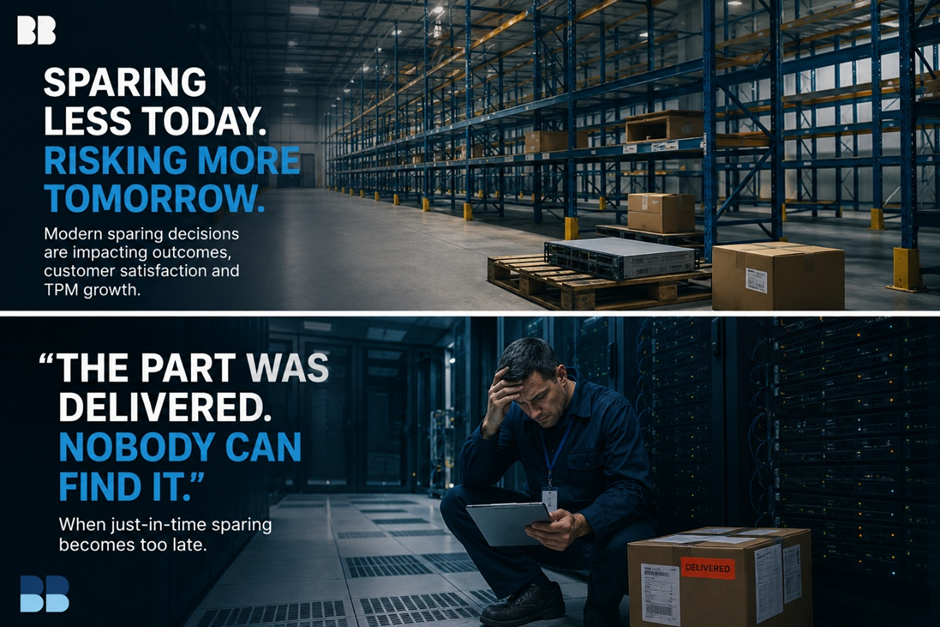
In this particular case, a TPM provider operating a just-in-time sparing model had arranged delivery of a critical replacement component for a Priority 1 outage. The part arrived separately from the field engineer, but when the engineer reached the data centre, the component could not be located because the delivery paperwork had not been completed correctly.
What should have been a straightforward hardware replacement turned into hours of delay while the customer, data centre staff, logistics teams, and support provider attempted to trace the missing component.
The impact went far beyond the technical fault itself.
Separate arrivals of engineers and parts created additional administrative overhead for the customer. Internal incident bridges continued running. Management escalations increased. Pressure mounted internally as systems remained unavailable longer than expected.
Most importantly, confidence in the TPM provider began to erode.
The customer made it clear that this was not an isolated incident. Similar failures had occurred multiple times, and it is a story we have heard repeatedly from other TPM customers in recent years.
This is the hidden operational risk of overly lean sparing models.
Reducing stock holdings and relying on fragmented, just-in-time logistics may improve short-term financial metrics, but every additional hand-off, shipment, broker, or paperwork dependency increases the probability of failure during the moments that matter most.
And when customers are dealing with critical outages, they are not measuring EBITDA improvements.
They are measuring outcomes.
The Rise of Broker-Led Procurement
Another major change has been the move away from trusted supplier relationships towards mass-bid procurement models.
Rather than relying on a smaller group of proven suppliers, some TPM providers now distribute enormous lists of required parts to brokers and encourage competitive bidding.
On paper, this can reduce acquisition costs.
In reality, it often damages the ecosystem that previously kept service levels high.
We have spoken with businesses across the TPM supply chain, and a consistent theme continues to emerge: the breakdown of trust, loyalty, and mutual support between TPM providers and suppliers.
Suppliers are expected to spend significant time identifying availability and pricing for large procurement lists, often with little reward in return. Over time, many begin to view the process as purely transactional and low value.
The consequence is subtle but important:
when the relationship disappears, so does the goodwill.
And goodwill matters enormously in support businesses.
When a supplier no longer feels valued, who wants to get out of bed in the middle of the night to source and test a £30 part for an urgent outage?
While these procurement approaches may save small percentages on acquisition costs, very few organisations appear to be measuring the wider operational impact across the rest of the business.
The hidden costs often appear elsewhere:
- Increased workload for service delivery teams
- More escalations into management
- Greater pressure on field engineers
- Additional customer administration and incident management
- SLA breaches and service credits
- Loss of customer confidence
- Customers moving support contracts to alternative TPM providers
What appears to be a procurement saving on paper can quickly become a far more expensive operational problem when viewed across the wider business.
The Real Impact Is Felt by the Customer
Reducing stock levels and moving inventory into increasingly remote locations may improve short-term financial metrics, but it often shifts operational risk directly onto the customer experience.
Delays in sourcing parts lead to delays in resolving incidents.
And those delays ripple throughout the organisation:
- The field engineer is left explaining why there is no replacement part.
- The Service Delivery Manager apologises for missed SLAs.
- The Account Manager fights to save the renewal.
- The customer loses confidence.
What initially looked like an isolated operational or financial optimisation becomes something much larger.
This is a pattern seen repeatedly across businesses:
well-intentioned decisions, often driven by incentives or financial targets, made in isolation without fully understanding the downstream operational impact.
Individually, each change may appear minor.
Collectively, they become “a thousand cuts”.
TPM Growth Requires More Than Cost Reduction
The irony is that many of these decisions are made with the intention of strengthening the business.
Yet from what we have observed, and experienced ourselves, excessive focus on stock reduction and just-in-time sparing can have the opposite effect.
Customers remember outages.
They remember delays.
They remember when support providers fail during critical moments.
And over time, that erosion of trust can contribute to shrinking contract bases rather than growth, eventually leading owners and investors to question leadership, operational strategy, and long-term direction.
Successful TPM businesses have always understood that support is not just about reducing cost.
It is about delivering confidence.
Putting the Customer First
Every decision made within a support organisation ultimately needs to answer one question:
Does this improve or weaken the customer experience?
Financial discipline matters.
Operational efficiency matters.
But neither can come at the expense of service delivery.
The strongest TPM providers historically succeeded because they balanced commercial management with operational resilience. They invested in stock where it mattered, maintained trusted supplier relationships, and built ecosystems capable of responding when customers needed them most.
That balance is becoming increasingly rare.
But it remains essential.
If you are reviewing your parts sourcing strategy, sparing model, or supply chain approach, Baby Blue IT & Consulting can help assess whether your operational model is truly aligned with the service experience your customers expect.
About the Author
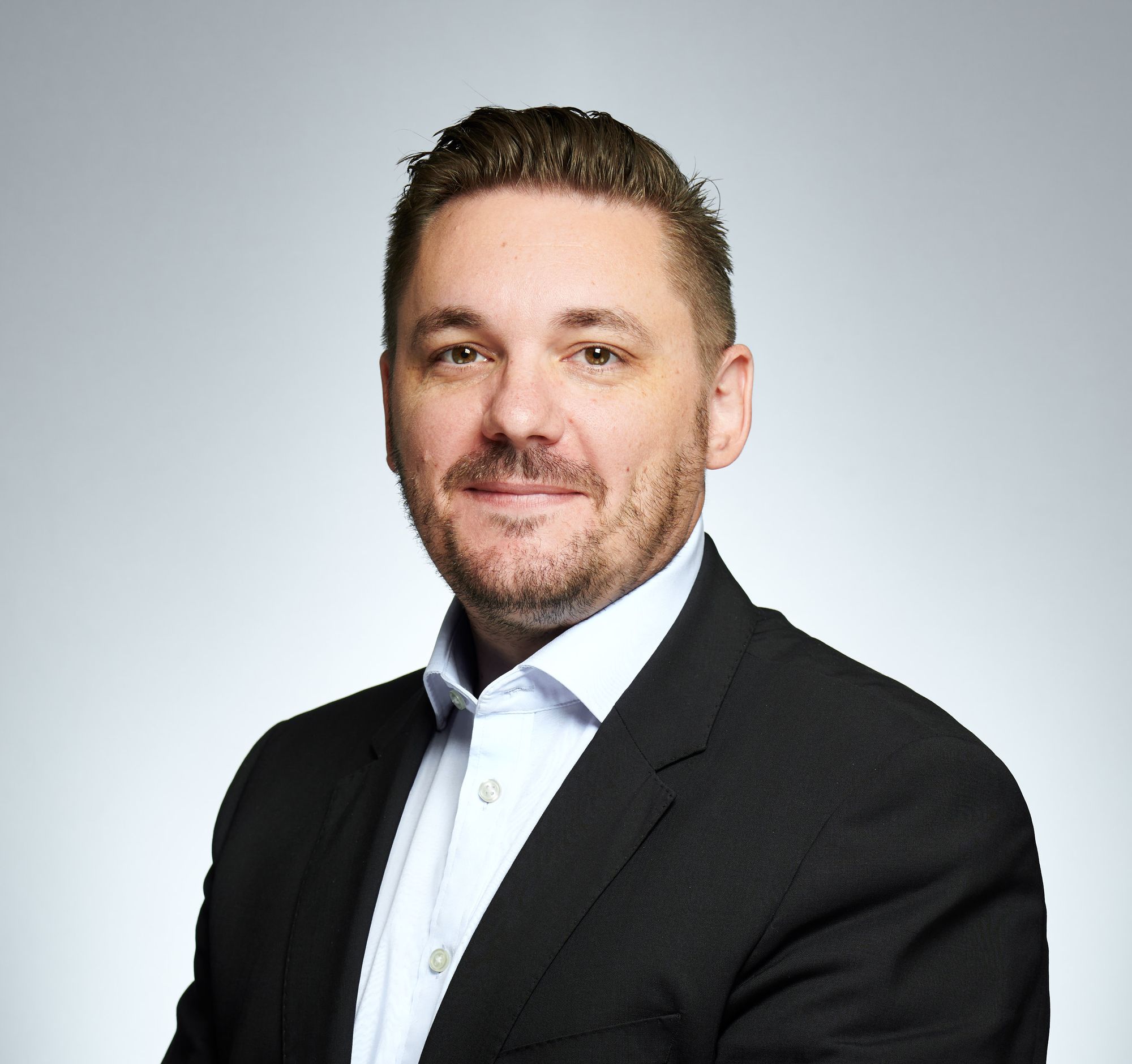
Chris Smith
Chris Smith is a Non-Executive Director and commercial advisor with over 30 years’ experience in IT services across managed services (MSP) and third-party maintenance (TPM). With a background in IBM hardware maintenance, he progressed from field engineer to Sales & Marketing Director, helping to create the foundations of Blue Chip Cloud, which became the largest IBM Power Cloud globally at the time. He played a key role in the sale of Blue Chip in 2021 and subsequently led commercial growth and integration initiatives within Service Express, including delivering significant managed services growth and strengthening revenue predictability. Chris now works with private equity-backed, investor-led and founder-owned IT services businesses, supporting growth, commercial strategy, integration and exit readiness. He is particularly focused on helping organisations improve revenue quality, margin discipline and scalable go-to-market execution across MSP and TPM models.
LinkedIn