TPM and AI Hardware Market Update: Progress, but the Fundamentals Still Apply
18 March 2026 - 4 Minute Read
Back in July, Chris Smith wrote a piece on TPM and AI hardware, questioning whether the model was ready to support GPU-driven infrastructure or whether the opportunity was being overstated. You can find a link to the original article at the end of this article.
At the time, his view was clear: while AI presented a significant opportunity, there were structural barriers that made it difficult for TPM to gain real traction. A few months on, the market has started to move. But importantly, the fundamentals have not changed as much as some might think. He outlines it all in this article, read on to see the updates Chris has to offer.
What’s Changed?
There are now clear signs that larger TPM providers are beginning to engage with AI infrastructure.
This is happening in two main ways.
1. Supporting AI-Ready Server Platforms
Rather than supporting GPUs as standalone components, TPM providers are starting to work with server platforms that have GPUs embedded within them.
This aligns more closely with traditional TPM models, where the focus is on the system as a whole, rather than individual high-value components.
2. Leveraging ITAD and the Secondary Market
The second shift is being driven by IT asset disposal (ITAD).
Providers with strong ITAD capabilities are now able to:
- Source GPU-enabled systems from end users
- Recover high-value components from decommissioned infrastructure
- Reuse parts for maintenance
- Resell hardware into secondary markets
With hardware costs rising and supply chains under pressure, access to parts has become a strategic advantage.
In simple terms, those who control supply are starting to shape the opportunity.
Why This Matters
This is the first real indication that TPM can begin to participate in the AI ecosystem, even if it’s not yet at the component level.
However, it’s important not to mistake early movement for market maturity.
What Still Holds True
The key points from my original article still stand and should be front of mind for anyone looking to invest or expand into this space.
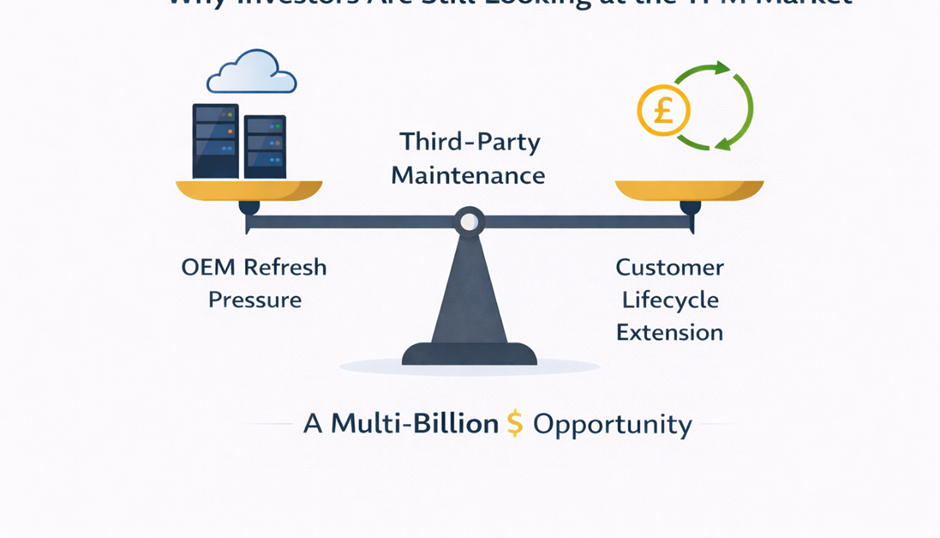
- Short refresh cycles continue to limit long-term support opportunities
- High cost and limited availability of parts still constrain scalability
- Thermal wear and tear remains a real issue, particularly for reused hardware
- Hyperscalers continue to self-maintain, limiting the addressable TPM market
- Skills, tooling, and OEM dependency still create barriers to entry
These are not small challenges. They are structural constraints that will take time to resolve.
So Where Does That Leave TPM?
There is clearly an emerging opportunity, particularly for providers who:
- Have strong ITAD capabilities
- Can access and manage scarce inventory
- Are already embedded in data centre operations
But this is still an early-stage market, and success will depend on how quickly three things evolve:
- Parts availability
- Pricing normalisation
- Support standardisation
Until then, this remains a space where select players can win, but it is far from a broad, scalable TPM opportunity.
Final Thought
The narrative around AI infrastructure is moving quickly, and it’s easy to get caught up in the momentum.
But from a TPM perspective, the fundamentals still matter.
Yes, the market is starting to open up.
Yes, there are early signs of participation.
But the barriers I outlined in July have not gone away.
If anything, they reinforce the need for a measured, strategic approach rather than a rush to market.
If you're operating in this space, I’d be interested to hear what you're seeing.
Are you successfully supporting AI environments today?
Or are you encountering the same barriers?
Read the original article here:
https://babyblueit.com/blog/tpm-and-ai-hardware-hype-reality-and-the-road-ahead
About the Author

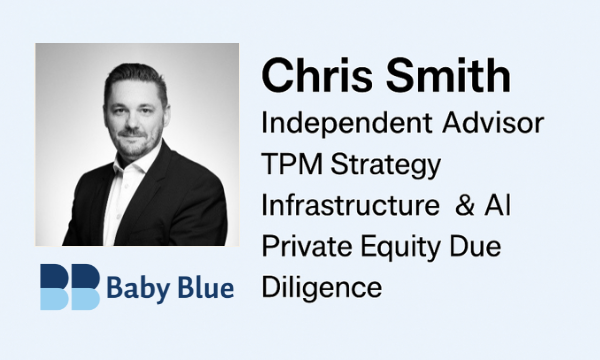
Chris Smith
Chris Smith is a Non-Executive Director and commercial advisor with over 30 years’ experience in IT services across managed services (MSP) and third-party maintenance (TPM). With a background in IBM hardware maintenance, he progressed from field engineer to Sales & Marketing Director, helping to create the foundations of Blue Chip Cloud, which became the largest IBM Power Cloud globally at the time. He played a key role in the sale of Blue Chip in 2021 and subsequently led commercial growth and integration initiatives within Service Express, including delivering significant managed services growth and strengthening revenue predictability. Chris now works with private equity-backed, investor-led and founder-owned IT services businesses, supporting growth, commercial strategy, integration and exit readiness. He is particularly focused on helping organisations improve revenue quality, margin discipline and scalable go-to-market execution across MSP and TPM models.
LinkedIn