The Cobra Effect in Sales: When Incentives Backfire
24 March 2026 - 3 Minute Read
The “cobra effect” is a simple idea with uncomfortable implications for modern sales leadership.
It describes what happens when a well-intentioned solution makes the problem worse.
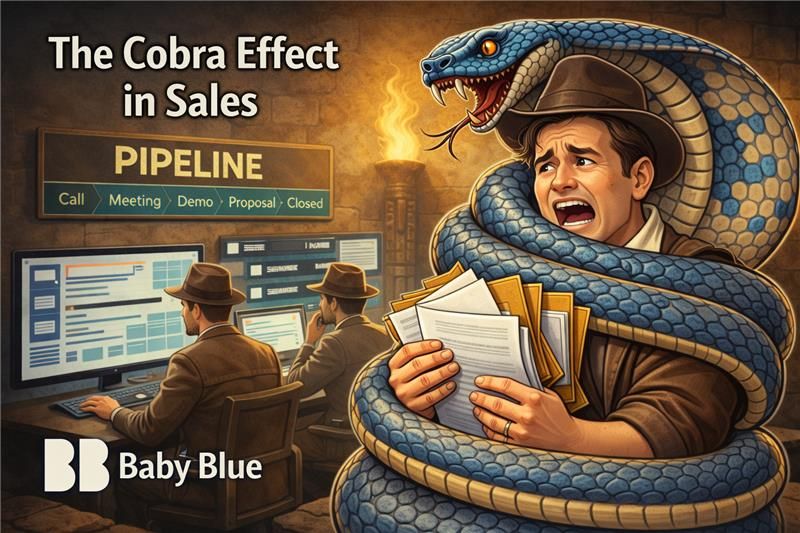
The term comes from a story in colonial India. A bounty was offered for dead cobras to reduce their population. Initially, it worked. Then people started breeding cobras to claim the reward. When the scheme was cancelled, the snakes were released and the problem got worse.
The system didn’t fail. It worked exactly as designed.
It just incentivised the wrong behaviour.
Where this shows up in modern sales
You see the same dynamic in MSP and TPM businesses when growth slows.
Leadership introduces:
- More pipeline stages
- More activity targets
- More CRM discipline
- More reporting
The intent is clear: improve visibility and increase sales performance.
But the behaviour that follows is entirely predictable.
A familiar example
SDRs are rewarded for meeting volume.
So they book meetings.
Quality becomes secondary.
Sales teams are then held accountable for converting those meetings into opportunities. When they don’t convert, the conclusion is predictable:
“Sales aren’t working hard enough”
So what happens next?
Salespeople adapt.
Opportunities start to get “created” to reflect the activity, not the reality. Deals are progressed to satisfy the system, not because the customer is genuinely moving.
When those opportunities inevitably stall or fail, they don’t disappear. They get recycled, reassigned, or left sitting in the pipeline.
Released back into the system.
Just like the cobras.
More activity. Less value.
And each cycle delivers diminishing returns.
Why this keeps happening
This isn’t a sales problem.
It’s a systems problem.
As explored in
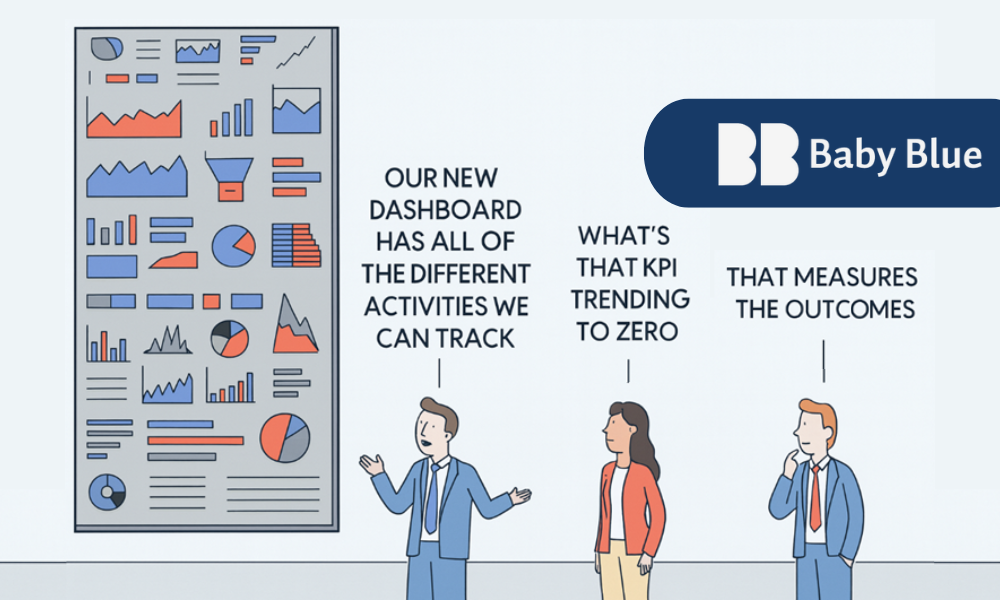
Good People, Bad Systems: Why the Overuse of KPIs Ultimately Holds Growing Companies Back
Most dysfunction in growing businesses doesn’t come from poor capability or lack of effort. It comes from capable people operating inside systems that reward the wrong behaviour.
Sales is no different.
SDRs are measured on meetings, so they book meetings.
Sales teams are measured on pipeline, so they create pipeline.
Nobody is acting irrationally.
They’re responding exactly as the system expects.
Where the cobra effect takes hold
This is where it becomes dangerous.
Because once the system starts producing the wrong behaviour, it compounds.
Low-quality meetings become low-quality opportunities.
Low-quality opportunities get pushed through stages.
When they fail, they don’t disappear, they get recycled.
Reassigned. Reworked. Recounted.
Released back into the pipeline.
Just like the cobras.
And each cycle adds more noise, more effort, and less value.
The link to sales KPIs
This is exactly the trap explored in
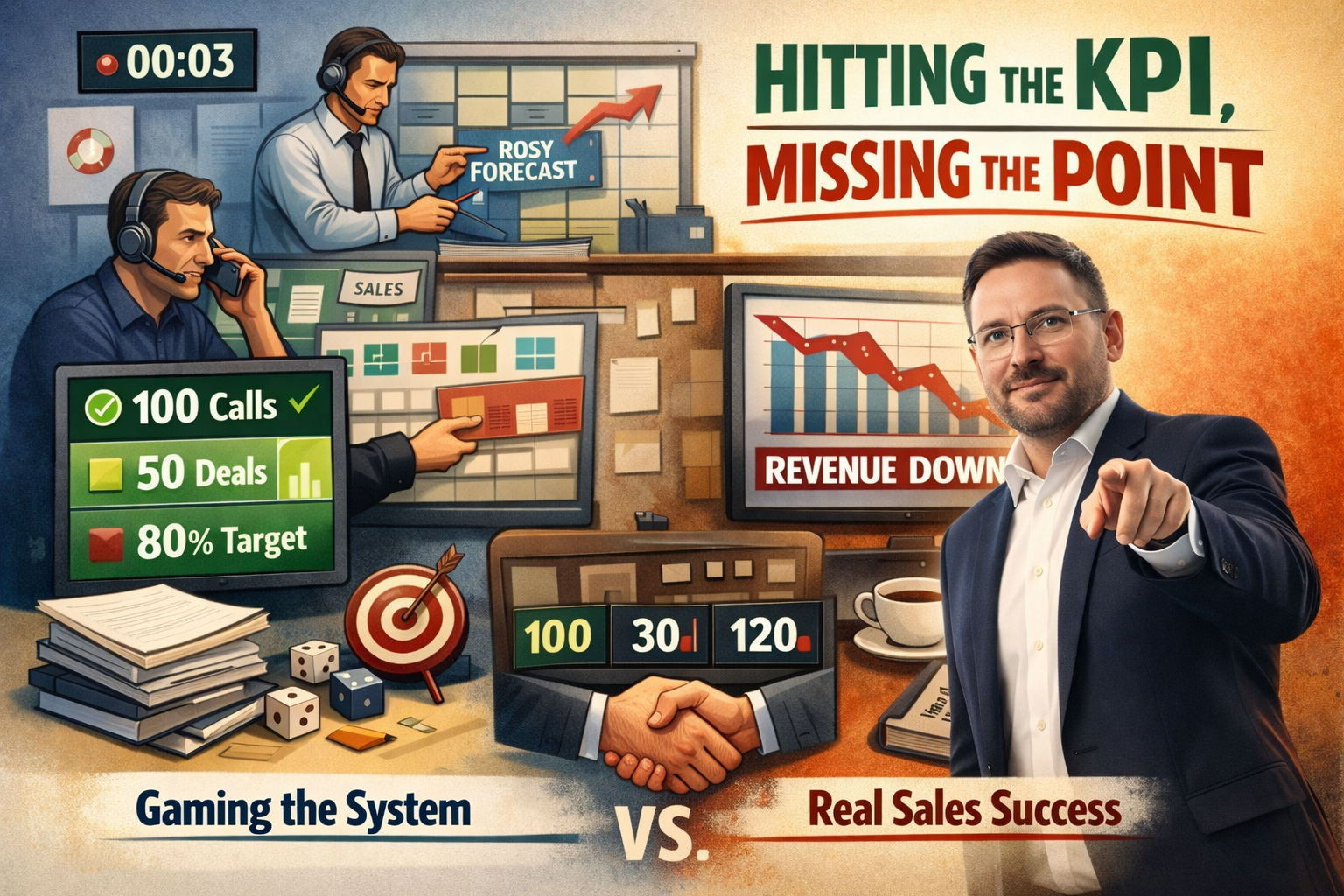
The Gaming of Sales KPIs: When Dashboards Replace Discipline
When dashboards become the focus, the system becomes the objective.
Sales teams don’t break the rules.
They learn how to win within them.
And in doing so, they often make the underlying problem worse.
Final thought
The cobra effect isn’t about poor salespeople or bad intent.
It’s what happens when good people are placed inside systems that reward the wrong things.
Fix the system, and behaviour follows.
Ignore it, and the problem compounds.
At Baby Blue, we work with PE-backed MSP and TPM businesses to fix exactly this problem.
Not by adding more dashboards or process, but by aligning:
- Commercial strategy
- Sales behaviour
- Incentives
- And delivery reality
So growth is built on quality, not activity.
If this sounds familiar, explore more insights on the Baby Blue IT Consulting blog or get in touch for a straight, practical conversation about what’s really driving (or blocking) your growth.
About the Author

Chris Smith
Chris Smith is a Non-Executive Director and commercial advisor with over 30 years’ experience in IT services across managed services (MSP) and third-party maintenance (TPM). With a background in IBM hardware maintenance, he progressed from field engineer to Sales & Marketing Director, helping to create the foundations of Blue Chip Cloud, which became the largest IBM Power Cloud globally at the time. He played a key role in the sale of Blue Chip in 2021 and subsequently led commercial growth and integration initiatives within Service Express, including delivering significant managed services growth and strengthening revenue predictability. Chris now works with private equity-backed, investor-led and founder-owned IT services businesses, supporting growth, commercial strategy, integration and exit readiness. He is particularly focused on helping organisations improve revenue quality, margin discipline and scalable go-to-market execution across MSP and TPM models.
LinkedIn