Beyond Maintenance: The Growth Evolution of TPM Providers. Part 1
12 May 2026 - 6 Minute Read
Cross-Selling and Expanding Existing Customer Accounts
For many IT service providers, growth conversations are heavily focused on winning new logos, entering new markets, or launching new services. Yet one of the biggest opportunities for sustainable and profitable growth is often already sitting within the existing customer base.
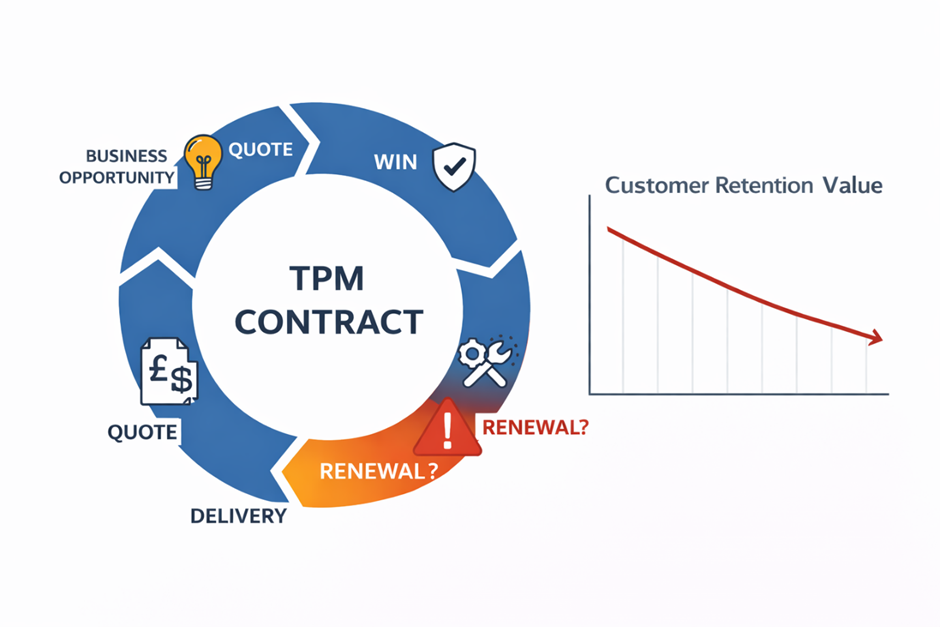
Too many providers treat customer relationships as operational transactions rather than long-term strategic engagements. Renewals become administrative exercises, customer meetings become reactive, and valuable opportunities remain undiscovered.
The businesses that consistently outperform their competitors understand a simple principle: existing customers are not just a source of recurring revenue they are a source of growth, intelligence, and long-term strategic value.
Customer Engagement Should Never Be Passive
One of the biggest mistakes service providers make is only engaging customers when something needs renewing or when there is an issue to resolve.
Strong businesses maintain regular contact across both sales and service functions. Not through constant selling, but through meaningful conversations designed to understand the customer’s operational challenges, future plans, and evolving priorities.
These discussions should focus on questions such as:
- What pressures is the business currently facing?
- Are there skills shortages internally?
- Are budgets becoming constrained?
- Are ageing platforms becoming a risk?
- Are there application performance or resilience concerns?
- Is the organisation reviewing cloud or hybrid strategies?
- Are they trying to simplify supplier management?
Too often within TPM businesses, customer engagement only intensifies around contract renewals, service issues, or End of Service Life (EOSL) events.
While EOSL milestones naturally create opportunities for discussion, they should never become the only trigger for meaningful customer engagement.
If providers only appear when hardware is ageing out or contracts are expiring, the relationship risks becoming purely transactional.
The strongest providers maintain consistent dialogue throughout the customer lifecycle, allowing them to understand changing operational priorities long before major infrastructure decisions are required. This creates stronger trust, better strategic alignment, and significantly greater opportunity to position additional services proactively rather than reactively.
The more consistently providers engage with customers, the more likely they are to uncover opportunities to deliver additional value through cross-sell and upsell services.
Importantly, this is not about selling harder. It is about becoming more relevant to the customer’s business.
Existing Customers Are One of Your Best Sources of Market Intelligence
Regular customer engagement provides another significant advantage that many businesses fail to fully utilise - insight into where the market is moving.
Patterns emerge quickly when conversations happen consistently across a customer base. Businesses begin hearing the same frustrations, operational challenges, and strategic concerns repeatedly.
This intelligence can become invaluable when shaping future service offerings.
For example:
- Are customers asking for more operational support?
- Are they struggling to retain infrastructure skills?
- Is there increasing interest in hybrid cloud?
- Are compliance and cyber security becoming more prominent concerns?
- Are organisations looking to reduce complexity and consolidate suppliers?
The best-performing providers often expand into adjacent services because their customers are already telling them where demand exists.
Rather than building services based purely on market hype or competitor activity, successful businesses listen to the operational challenges their customers are trying to solve.
Successful Renewals Start Long Before the Contract Ends
Too many providers begin renewal discussions only weeks before a contract expires.
The most successful businesses work the renewal cycle continuously throughout the customer relationship.
Consistent engagement builds stronger relationships, creates access to wider stakeholder groups, and provides visibility into future customer plans. It also allows providers to position additional services before competitors become involved.
With the right engagement model, businesses can:
- Align multiple contracts into single renewal discussions
- Extend agreements early
- Consolidate additional services into longer-term agreements
- Reduce procurement complexity for the customer
- Increase customer dependency on their services
This creates “stickier” customers organisations that see the provider as part of their operational success rather than simply a maintenance supplier.
Hardware Maintenance Is Rarely the Full Opportunity
Within the TPM market particularly, many providers focus too narrowly on the hardware already under contract.
If you support the servers, what about the storage and networking?
If you support HPE infrastructure, what other OEM platforms are operating within the environment?
If you maintain production systems, what about backup, disaster recovery, or test and development environments?
The real opportunity comes from understanding the customer’s complete infrastructure estate and where each platform sits within its lifecycle.
Different lifecycle stages naturally create different service opportunities:
- Mid-life systems may suit TPM support
- Ageing infrastructure may create upgrade or refresh opportunities
- End-of-life assets may require ITAD services
- Legacy environments may need specialist professional services
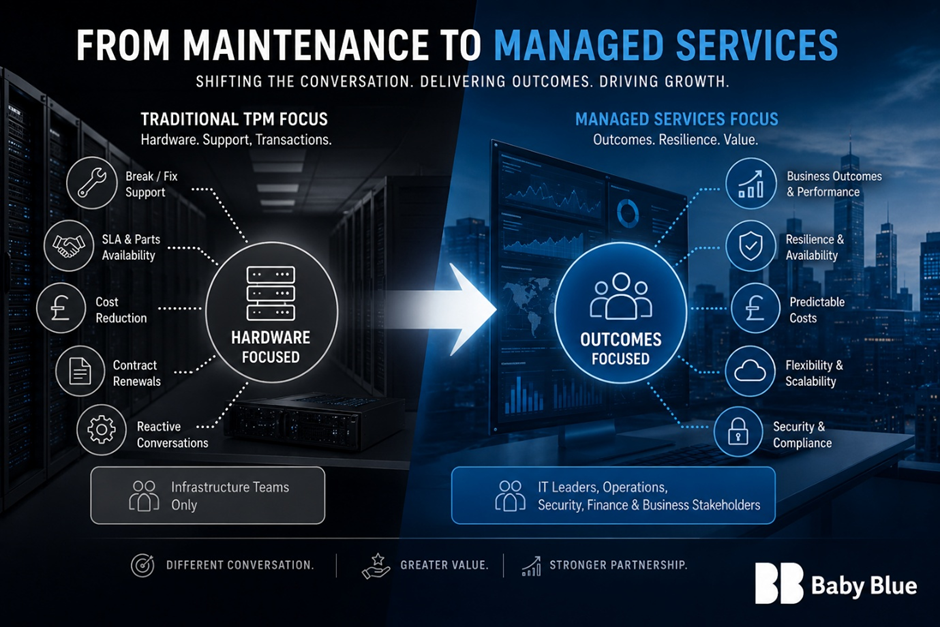
- Consolidated estates may open discussions around managed services or cloud
The key is understanding the customer’s environment well enough to align services against changing operational needs.
Why Direct Customer Relationships Matter So Much
There is a reason Private Equity investors typically place higher valuations on businesses with strong direct customer relationships rather than purely channel-led models.
Direct customer ownership can create significantly greater expansion potential and higher renewal rates.
Providers with regular customer engagement, trusted operational relationships, and broad visibility across infrastructure estates are far better positioned to grow wallet share over time. The initial maintenance contract often becomes the entry point for a much broader lifecycle relationship.
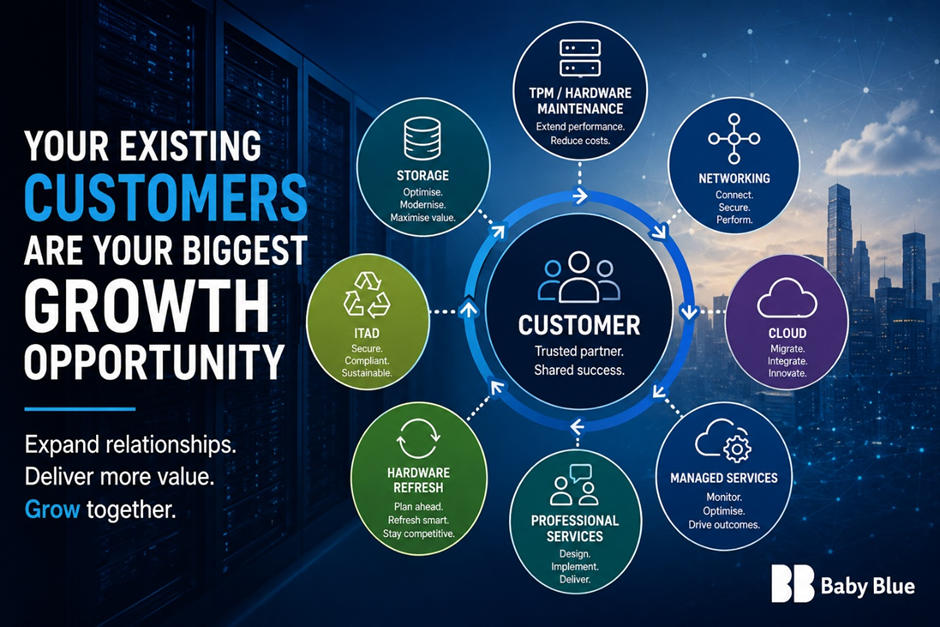
This is particularly important within TPM and infrastructure services businesses where opportunities can extend far beyond support contracts alone:
- Additional OEM support
- Storage and networking services
- ITAD
- Hardware refresh projects
- Professional services
- Managed services
- Hosting and cloud solutions
The providers that can deliver services across multiple stages of the infrastructure lifecycle become significantly more valuable to both customers and investors because they create deeper, longer-term customer dependency and substantially larger revenue opportunities.
The most successful TPM providers are no longer simply maintaining infrastructure they are supporting the customer across the full technology lifecycle.
Growth Comes from Understanding Customers Better
Many IT service providers spend huge amounts of time searching for new customers while underutilising the relationships they already have.
The businesses that consistently grow are usually the ones that:
- Maintain regular customer engagement
- Understand operational challenges
- Use customer insight to shape strategy
- Position services around real business needs
- Build long-term trusted relationships
Growth does not always come from finding new customers.
Very often, it comes from understanding existing customers better than anyone else.
At Baby Blue we have built teams to specifically cross sell and upsell beyond TPM talk to us about how we can help you do the same.
In Part 2, we explore why transitioning from TPM sales to managed services sales requires a completely different commercial approach and why many providers underestimate the scale of that change. Click here to read this article.
About the Author

Chris Smith
Chris Smith is a Non-Executive Director and commercial advisor with over 30 years’ experience in IT services across managed services (MSP) and third-party maintenance (TPM). With a background in IBM hardware maintenance, he progressed from field engineer to Sales & Marketing Director, helping to create the foundations of Blue Chip Cloud, which became the largest IBM Power Cloud globally at the time. He played a key role in the sale of Blue Chip in 2021 and subsequently led commercial growth and integration initiatives within Service Express, including delivering significant managed services growth and strengthening revenue predictability. Chris now works with private equity-backed, investor-led and founder-owned IT services businesses, supporting growth, commercial strategy, integration and exit readiness. He is particularly focused on helping organisations improve revenue quality, margin discipline and scalable go-to-market execution across MSP and TPM models.
LinkedIn