Pancake Day Came and Went
18 February 2026 - 2 Minute Read
Pancake Day came and went this week. A short window of good intentions, careful preparation, and the occasional flip that didn’t quite go to plan.
With Lent now underway, it’s traditionally a time to give something up and refocus on what really matters. That idea of stepping back, simplifying, and removing the excess resonates far beyond the kitchen.
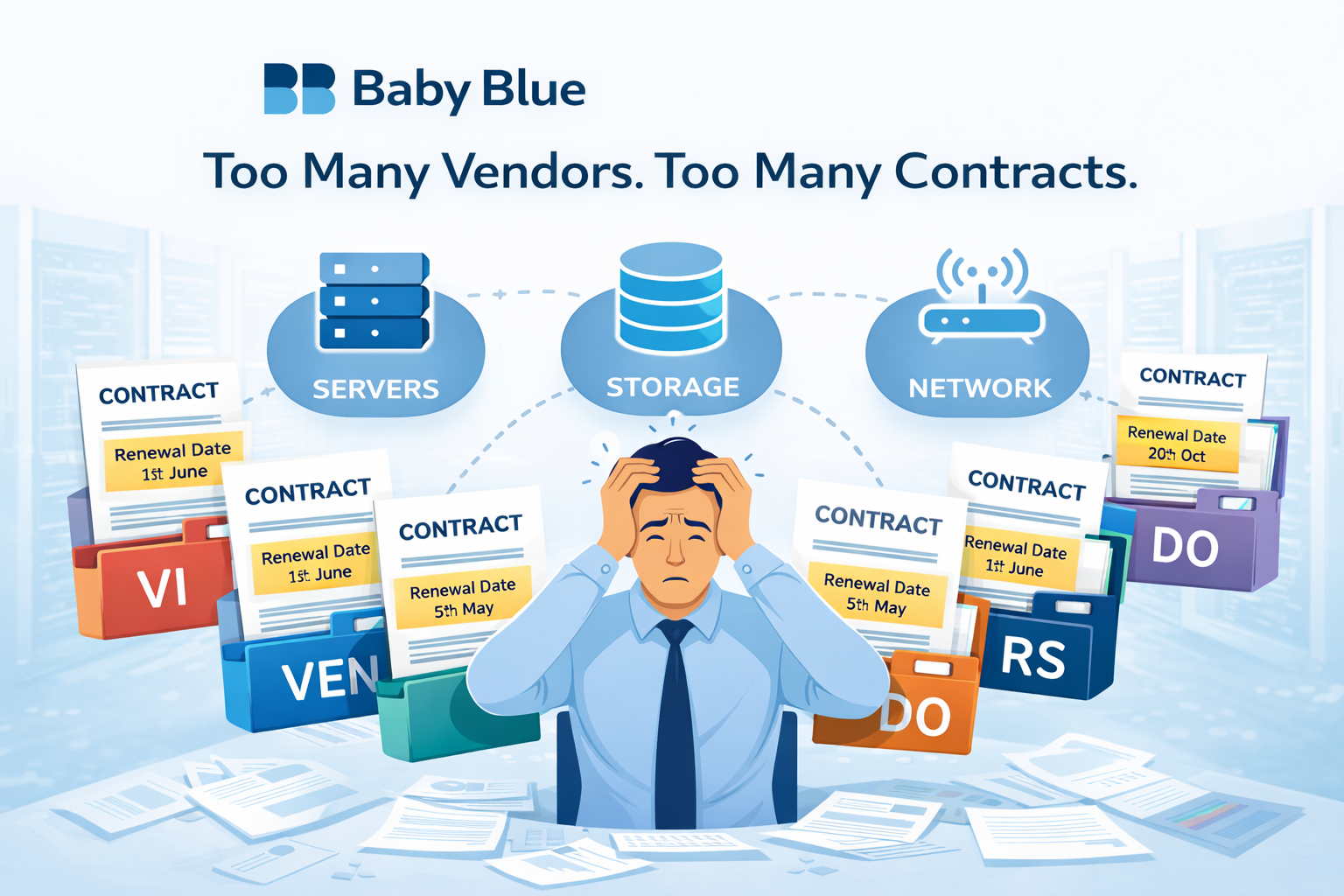
In IT infrastructure support, complexity rarely arrives all at once. It builds gradually: legacy maintenance agreements that no longer fit the environment, overlapping support contracts from past refresh cycles, and rising OEM costs that are accepted simply because “that’s what we’ve always done”.
Over time, this creates unnecessary cost, operational friction, and reduced flexibility, all without delivering additional value.
This is where a deliberate pause can make a real difference.
At Baby Blue, we work with organisations to review and rationalise their hardware support strategies. That might mean identifying where third-party maintenance provides a better commercial outcome, assessing the viability of self-sparing, or aligning support models to actual business risk rather than historic procurement decisions.
The result is simpler support, improved cost control, and greater confidence that infrastructure services are aligned with operational priorities.
If Pancake Day is about getting the flip right, Lent is about removing the excess. Both serve as timely reminders that simplification, when done thoughtfully, can deliver real benefits.
If you’re using this time of year to review priorities, it may also be a good moment to ask whether your support strategy still fits the needs of your business today.
About the Author

Chris Smith
Chris Smith is a Non-Executive Director and commercial advisor with over 30 years’ experience in IT services across managed services (MSP) and third-party maintenance (TPM). With a background in IBM hardware maintenance, he progressed from field engineer to Sales & Marketing Director, helping to create the foundations of Blue Chip Cloud, which became the largest IBM Power Cloud globally at the time. He played a key role in the sale of Blue Chip in 2021 and subsequently led commercial growth and integration initiatives within Service Express, including delivering significant managed services growth and strengthening revenue predictability. Chris now works with private equity-backed, investor-led and founder-owned IT services businesses, supporting growth, commercial strategy, integration and exit readiness. He is particularly focused on helping organisations improve revenue quality, margin discipline and scalable go-to-market execution across MSP and TPM models.
LinkedIn