Building TPM Businesses That Investors Want to Buy
19 May 2026 - 5 Minute Read
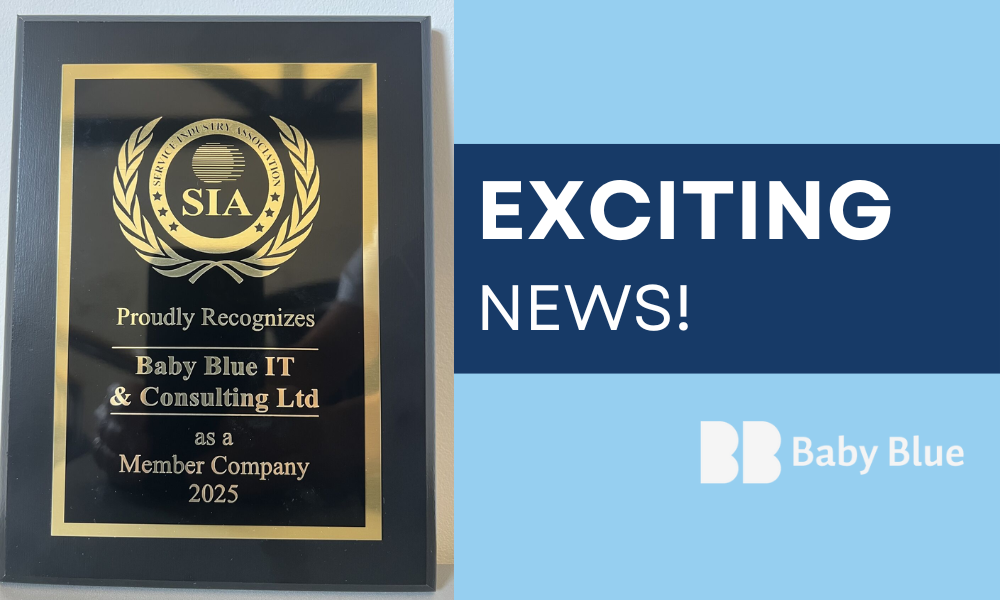
As the industry gathers this week at the 2026 EMEA Conference in Lisbon hosted by the Service Industry Association in Lisbon, many of the conversations across the Third-Party Maintenance market will focus on growth, consolidation, AI infrastructure, and the future of the industry.
But behind many of those conversations sits another important reality.
A growing number of TPM businesses are now reaching a stage where owners are thinking about investment, acquisition, scaling, or eventual exit. At the same time, private equity firms and strategic buyers continue to show strong interest in the market attracted by recurring revenues, loyal customer bases, and resilient service models.
At Baby Blue IT Consulting, we regularly help both sides of that equation.
We work with TPM business owners preparing for growth or exit, while also supporting investors looking to understand what truly creates long-term value in the maintenance and infrastructure services market.
Because in TPM, not all growth creates value.

The TPM Market Still Has Strong Fundamentals
Despite years of predictions that OEMs would eliminate third-party maintenance, the market continues to thrive because customers still need:
- Commercial flexibility
- Longer infrastructure life cycles
- Faster support responsiveness
- Multi-vendor support capability
- Better value from existing platforms
As we explored in our article on why the TPM market still exists, OEMs and TPM providers often optimise for very different customer outcomes.
But surviving in the market and building a scalable, investable business are very different things.
Many of the strongest-performing TPM providers are no longer purely maintenance businesses. As we discussed in Part 2 of our “Beyond Maintenance” series, providers are increasingly expanding into managed services, monitoring, hosting, lifecycle services, and operational consultancy.
This evolution creates significant growth opportunities, but it also changes the commercial and operational requirements of the business. Selling and delivering managed services requires different leadership, processes, customer engagement models, and sales capability than traditional TPM alone.
What Investors Often Miss
Many investors initially focus on familiar metrics:
- Revenue growth
- EBITDA
- Contract values
- Renewal rates
- Customer concentration
Those are important, but operational maturity matters just as much.
We often see businesses with strong headline numbers hiding structural weaknesses underneath:
- Overdependence on founders
- Weak renewal management
- Poorly aligned sales incentives
- Inconsistent service delivery
- Channel-heavy growth models
- Operational processes that cannot scale
These issues rarely show up early in diligence. They appear later when growth slows, service quality drops, or integration becomes difficult after acquisition.
As we discussed in several recent articles, many TPM businesses succeed entrepreneurially but struggle operationally as they scale. Processes, incentives, and leadership structures that worked at £5 million turnover often fail at £50 million.
Quality of Growth Matters
One of the biggest misconceptions in the industry is that rapid growth automatically increases valuation.
It does not.
Poorly controlled growth can actually reduce enterprise value.
The strongest TPM businesses are usually those with:
- Strong customer retention
- Disciplined renewals
- Scalable operational governance
- Stable engineering delivery
- Diversified customer acquisition
- Leadership depth beyond the founder
We also increasingly see investors looking favourably at TPM providers that successfully expand wallet share within existing customer relationships. Businesses that transition customers from maintenance-only contracts into broader infrastructure and managed service engagements often create stronger retention, greater revenue predictability, and higher long-term enterprise value.
This is why we often focus on “quality of growth” rather than simply growth itself.
A business with predictable renewals, mature operations, and strong customer retention will usually command more strategic value than one growing quickly on fragile foundations.
Preparing for Investment Starts Earlier Than Most Think
The best investment and exit outcomes rarely happen by accident.
The strongest businesses typically prepare years in advance by:
- Improving operational maturity
- Strengthening management structures
- Reducing founder dependency
- Aligning incentives correctly
- Improving customer retention
- Building scalable service processes
These changes not only improve valuation potential they usually improve operational performance immediately.
The Next Phase of TPM
The TPM market remains one of the most resilient sectors within enterprise infrastructure services.
But the next generation of successful businesses will not simply be defined by maintenance capability alone.
The businesses creating the most value are increasingly combining:
- Technical credibility
- Commercial flexibility
- Operational maturity
- Managed services capability
- Strong customer retention
- Scalable leadership
- Intelligent growth strategies
For owners, that means building businesses designed to scale beyond the founder.
For investors, it means looking beyond headline EBITDA.
And for the industry gathering in Lisbon this week, it is a reminder that long-term value in TPM will increasingly be defined by the quality, maturity, and adaptability of the businesses delivering the service, not just the maintenance contracts themselves.
Chris Smith and Lee Bailey are attending the conference on behalf of Baby Blue IT Consulting and regularly support TPM business owners, leadership teams, and investors through strategic advisory, growth planning, operational transformation, and commercial consultancy engagements.
Baby Blue also provides experienced fractional leadership and Non-Executive Director support, helping organisations and investors navigate growth challenges, operational scaling, acquisition planning, and long-term value creation within the TPM and infrastructure services market.
Contact Baby Blue IT Consulting to speak to Lee and Chris about this.
About the Author

Chris Smith
Chris Smith is a Non-Executive Director and commercial advisor with over 30 years’ experience in IT services across managed services (MSP) and third-party maintenance (TPM). With a background in IBM hardware maintenance, he progressed from field engineer to Sales & Marketing Director, helping to create the foundations of Blue Chip Cloud, which became the largest IBM Power Cloud globally at the time. He played a key role in the sale of Blue Chip in 2021 and subsequently led commercial growth and integration initiatives within Service Express, including delivering significant managed services growth and strengthening revenue predictability. Chris now works with private equity-backed, investor-led and founder-owned IT services businesses, supporting growth, commercial strategy, integration and exit readiness. He is particularly focused on helping organisations improve revenue quality, margin discipline and scalable go-to-market execution across MSP and TPM models.
LinkedIn